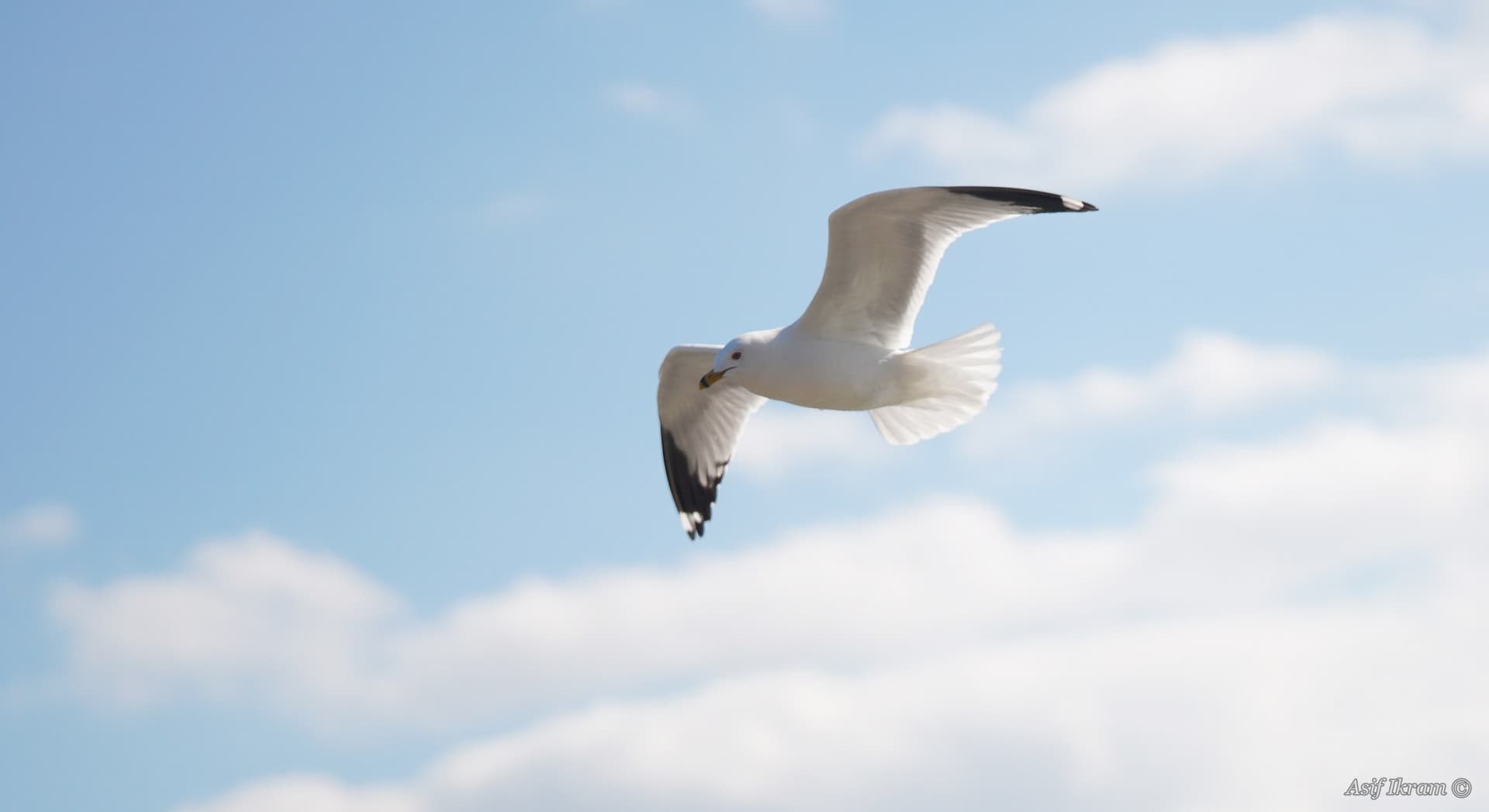
A Ring-billed Gull banks on the breeze. Named for the dark band near the tip of its bill, this gull is one of the most common in North America — equally at home on a lake, a beach, or a supermarket car park.
11 Apr 2026 - Sony A6400 - Viltrox 85mm f/2 - 1/4000s · f/2 · ISO 100
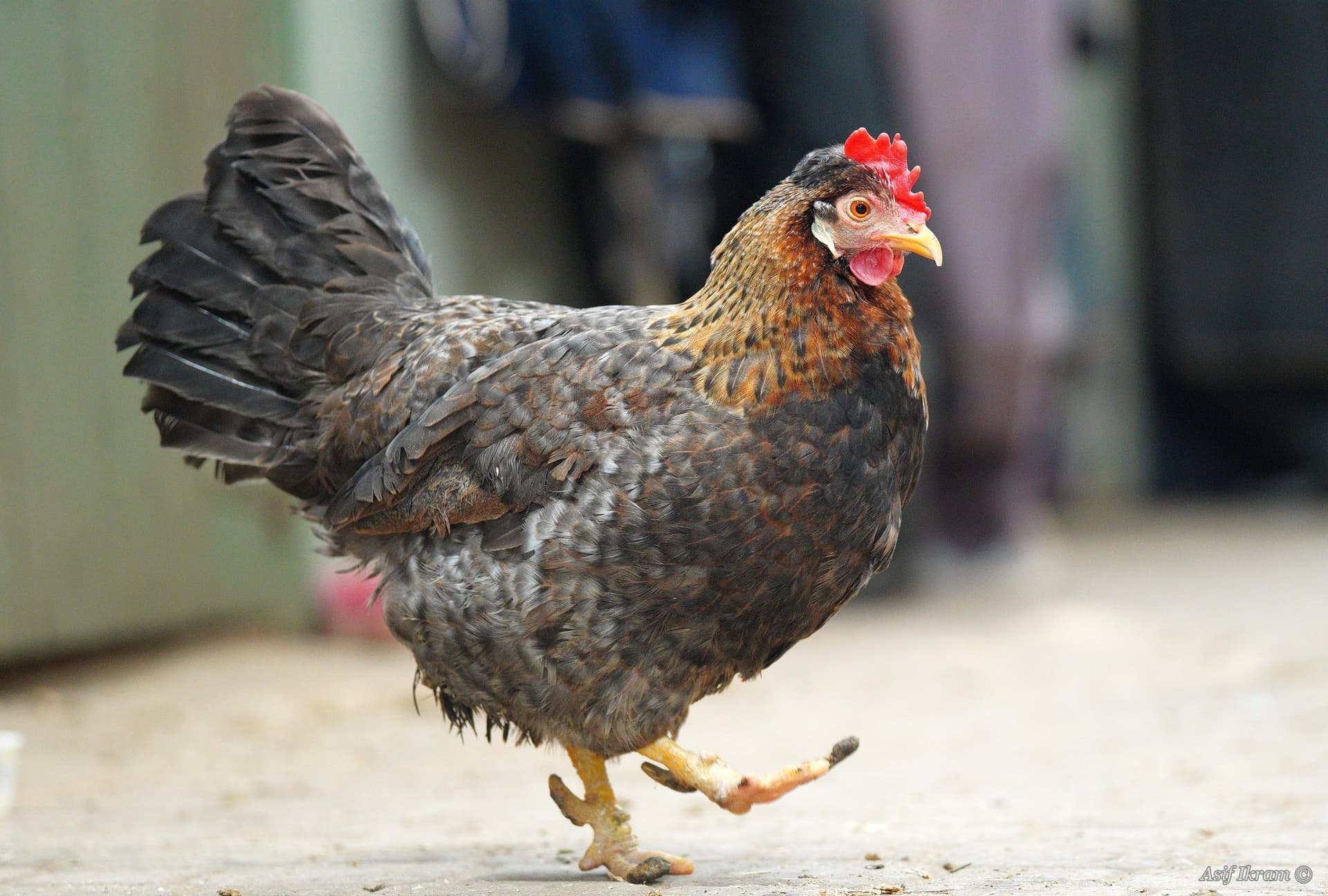
A bantam hen in full stride — technically a bird, and absolutely not to be overlooked. The feather detail and that side-eye make this one of the more characterful shots in the collection.
16 May 2026 - Sony A6400 - Viltrox 85mm f/2 - 1/160s · f/2 · ISO 1600
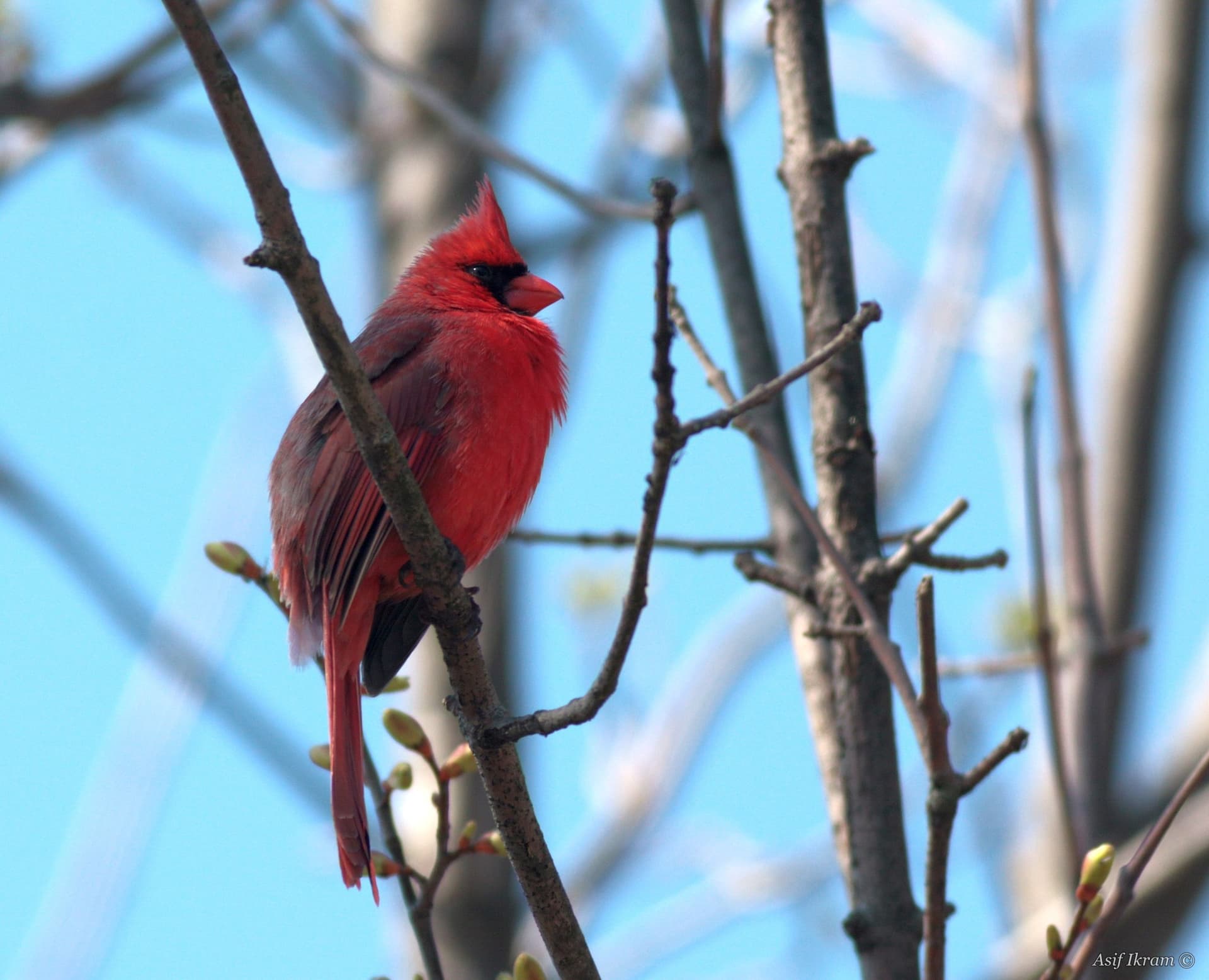
A male Northern Cardinal in his full breeding plumage — all-red body, swept crest, and that distinctive black mask. One of the most striking birds in eastern North America, and the state bird of seven US states.
17 May 2026 - Canon EOS R100 - EF 400mm f/5.6L - 1/1000s · f/5.6 · ISO 200
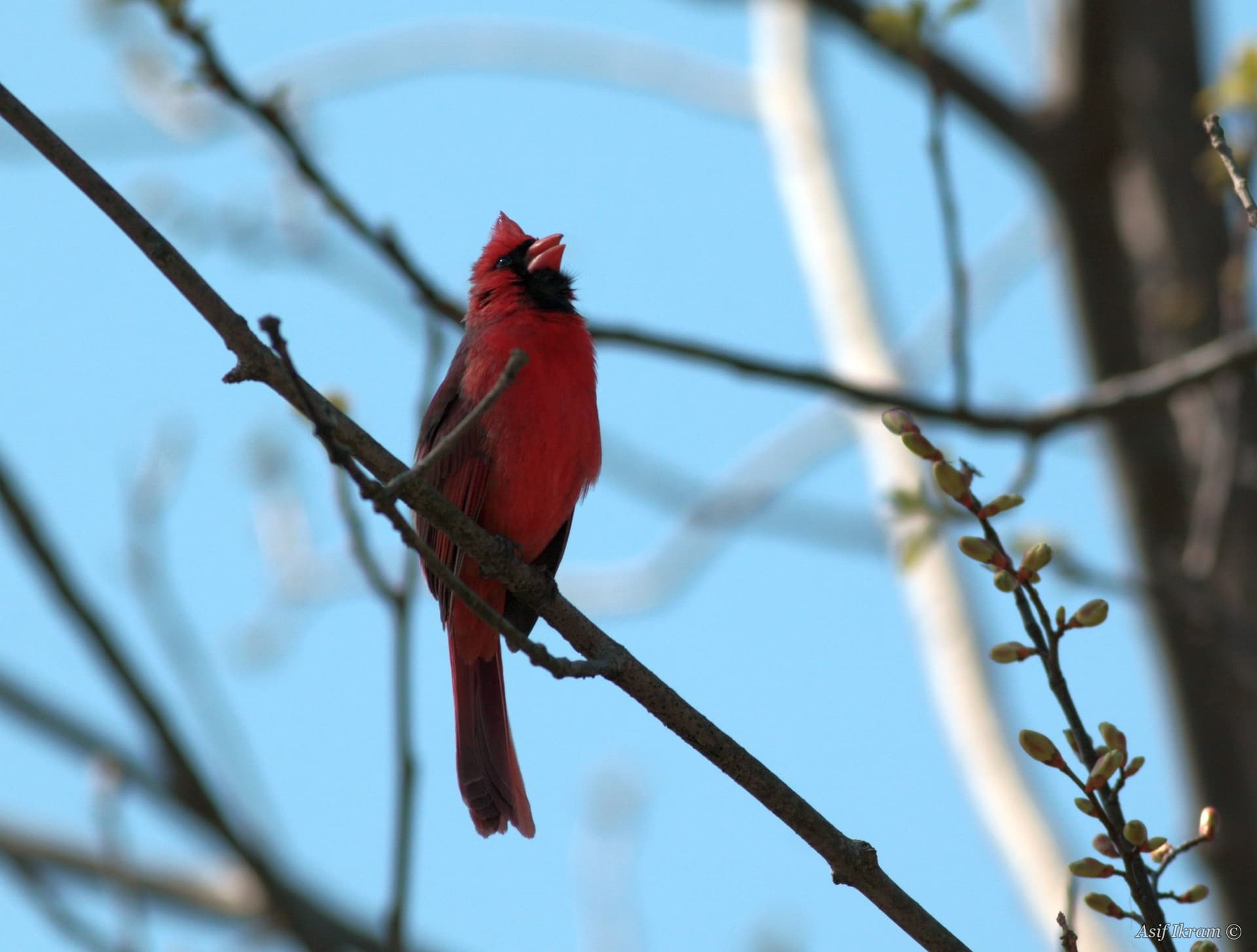
The same Cardinal, now in full song — beak open, crest raised. Cardinals are known for their loud, clear whistle; both males and females sing, which is unusual among North American songbirds.
17 May 2026 - Canon EOS R100 - EF 400mm f/5.6L - 1/1600s · f/5.6 · ISO 200
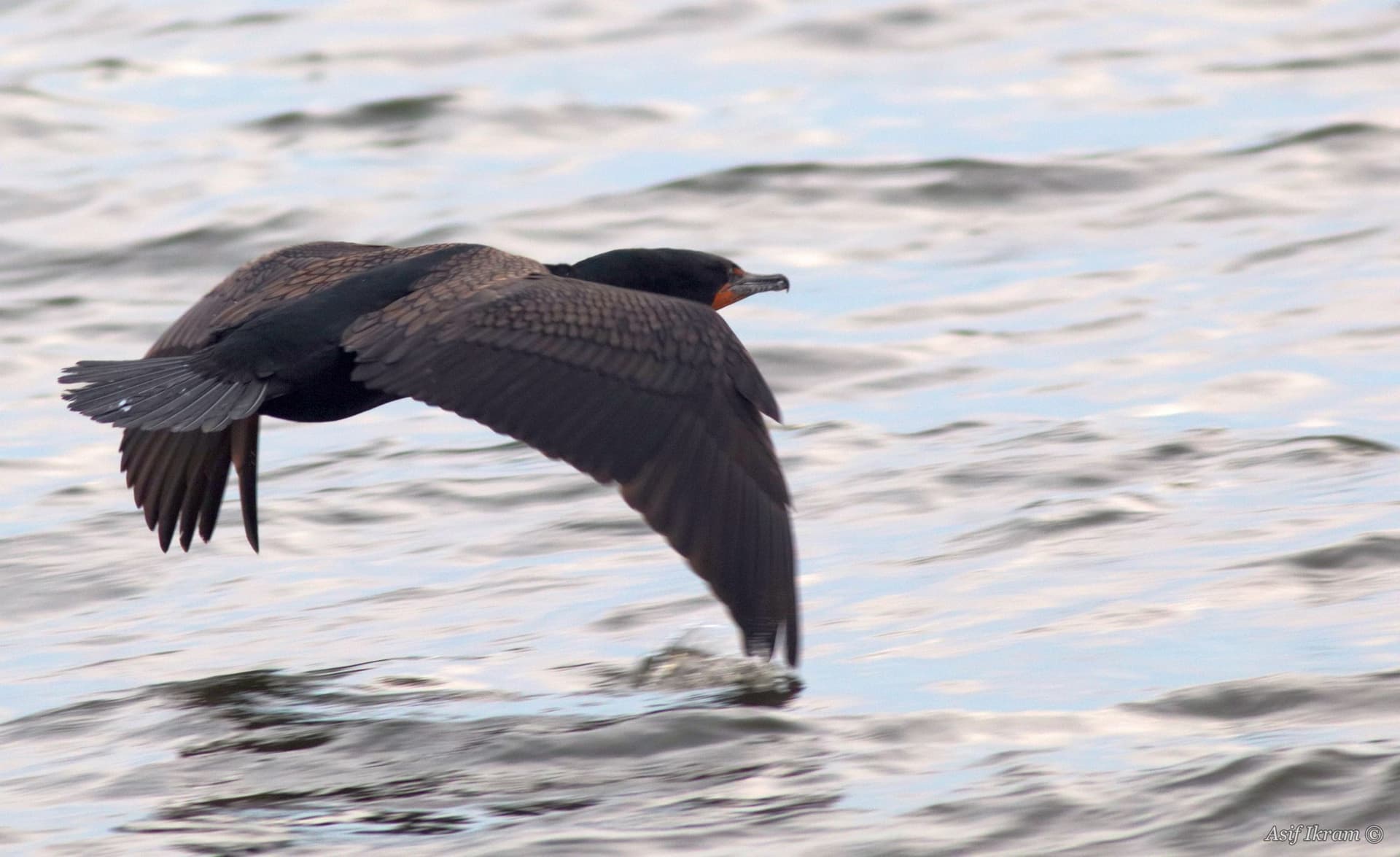
A Double-crested Cormorant skims the surface at speed. Unlike most waterbirds, cormorants have feathers that absorb water rather than repel it — which makes them excellent divers but means they must dry their wings after every swim. The characteristic outstretched-wing pose on a post is their solution.
18 May 2026 - Canon EOS R100 - EF 400mm f/5.6L - 1/800s · f/5.6 · ISO 320
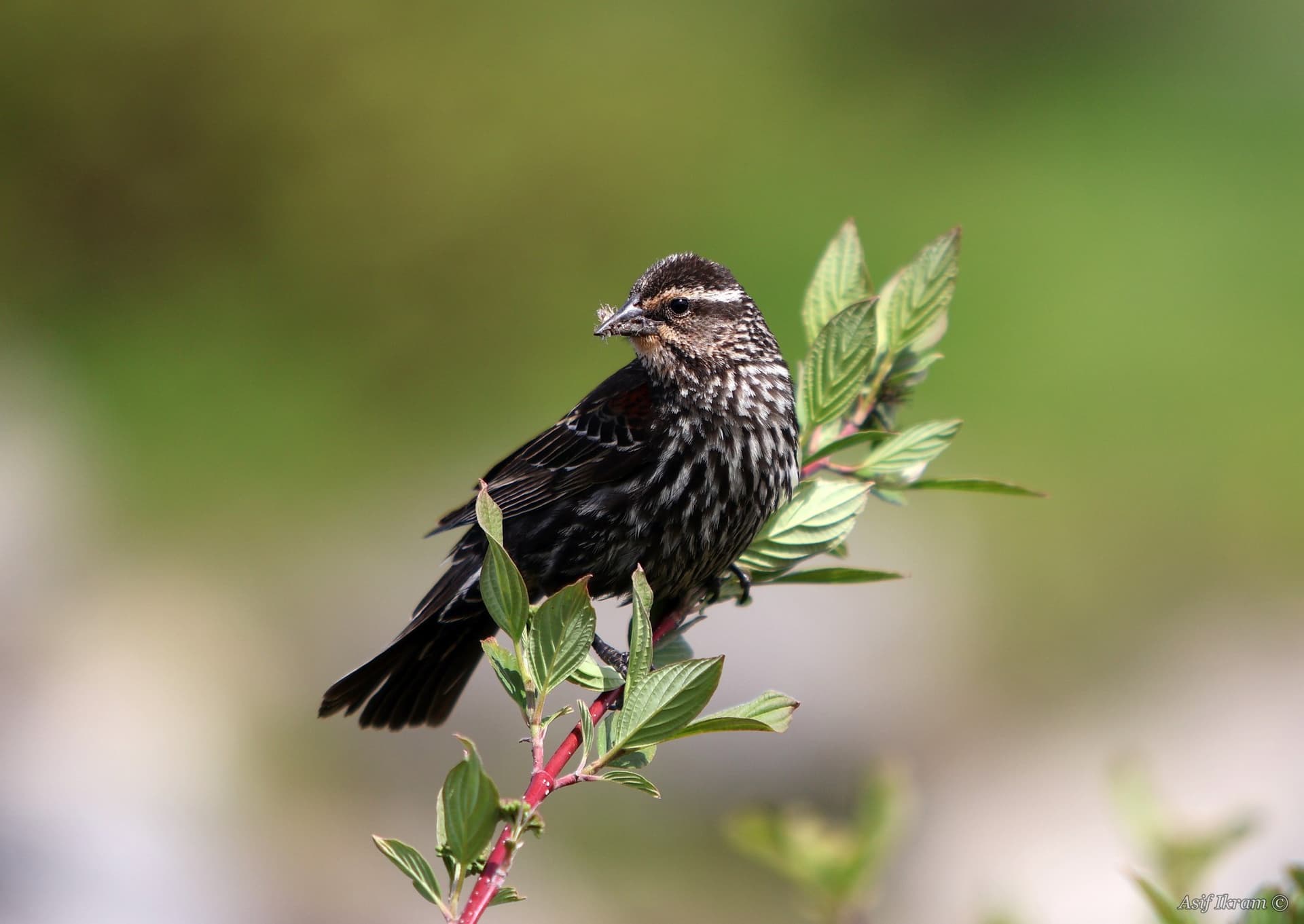
A female Red-winged Blackbird perched on a wildflower stem. She's easy to overlook next to the glossy black male — but her streaked brown plumage is a masterclass in camouflage, ideal for nesting low in marshes and reeds.
23 May 2026 - Canon EOS R10 - EF 70-200mm f/2.8L - 1/1600s · f/2.8 · ISO 100
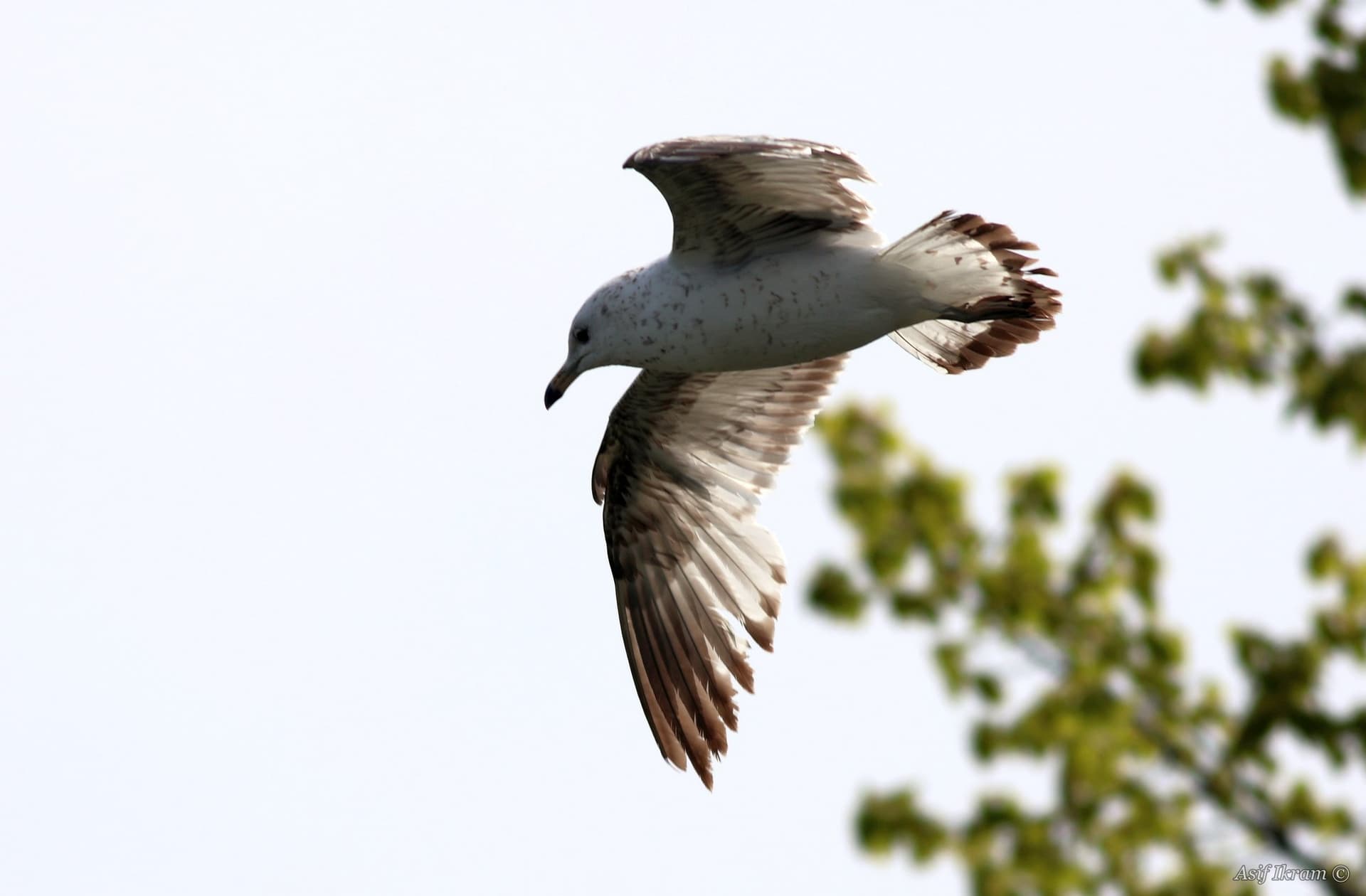
A large gull — likely a Ring-billed or Herring Gull in its mottled first or second-year plumage — soars past the tree line. Young gulls take two to four years to acquire the clean white-and-grey adult plumage.
23 May 2026 - Canon EOS R10 - EF 400mm f/5.6L - 1/1600s · f/5.6 · ISO 100
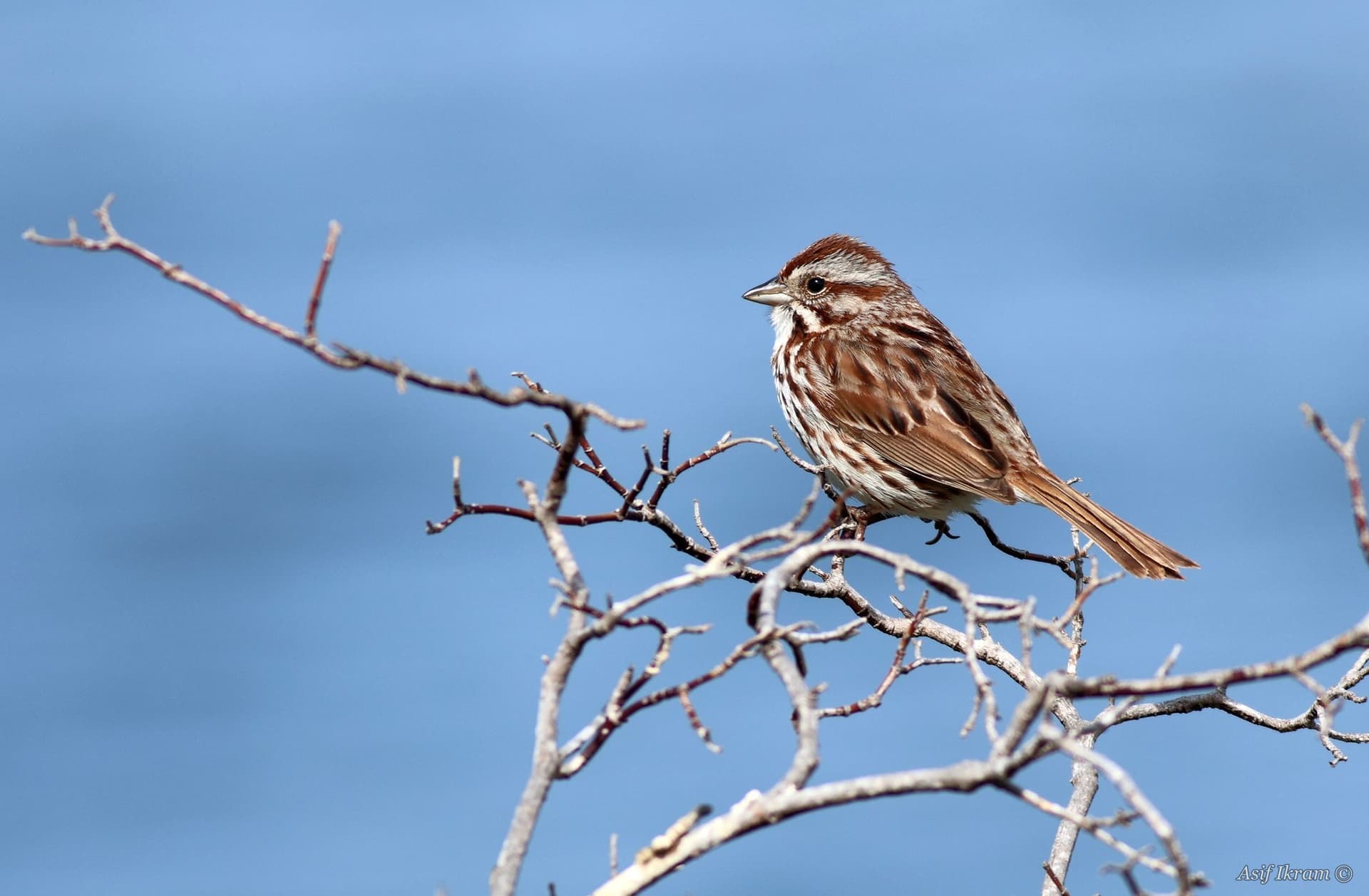
A Song Sparrow perches on bare winter twigs against a blue-water background. One of the most widespread sparrows in North America, the Song Sparrow is named for its complex, musical call — each individual bird has its own unique song.
23 May 2026 - Canon EOS R10 - EF 400mm f/5.6L - 1/640s · f/5.6 · ISO 125
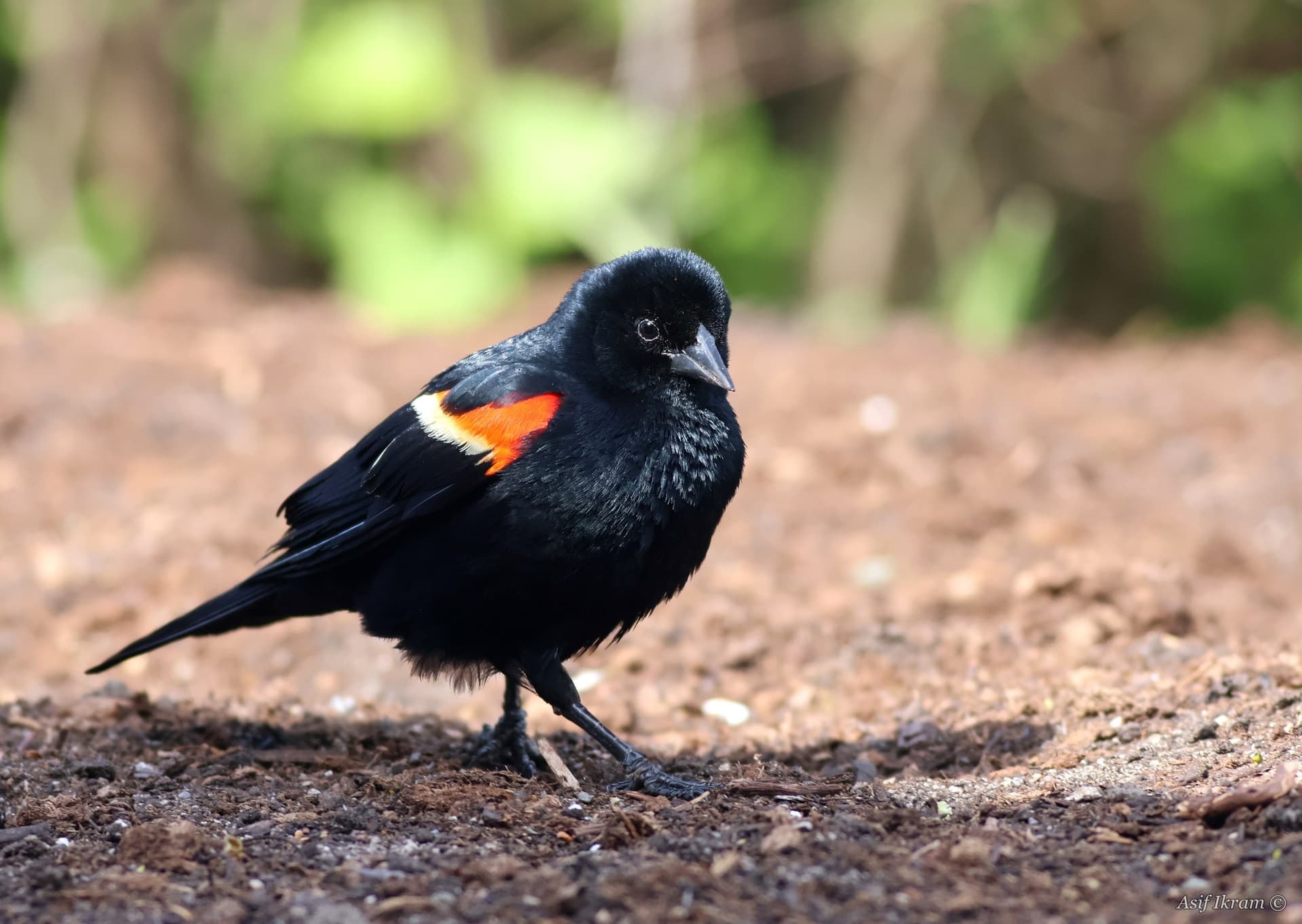
A male Red-winged Blackbird on the ground, showing off his vivid red-and-yellow epaulettes. In breeding season, males spend hours perched prominently singing and flashing those shoulder patches to defend territory — one of the most common and assertive birds at any wetland in Canada.
23 May 2026 - Canon EOS R10 - EF 400mm f/5.6L - 1/800s · f/5.6 · ISO 640
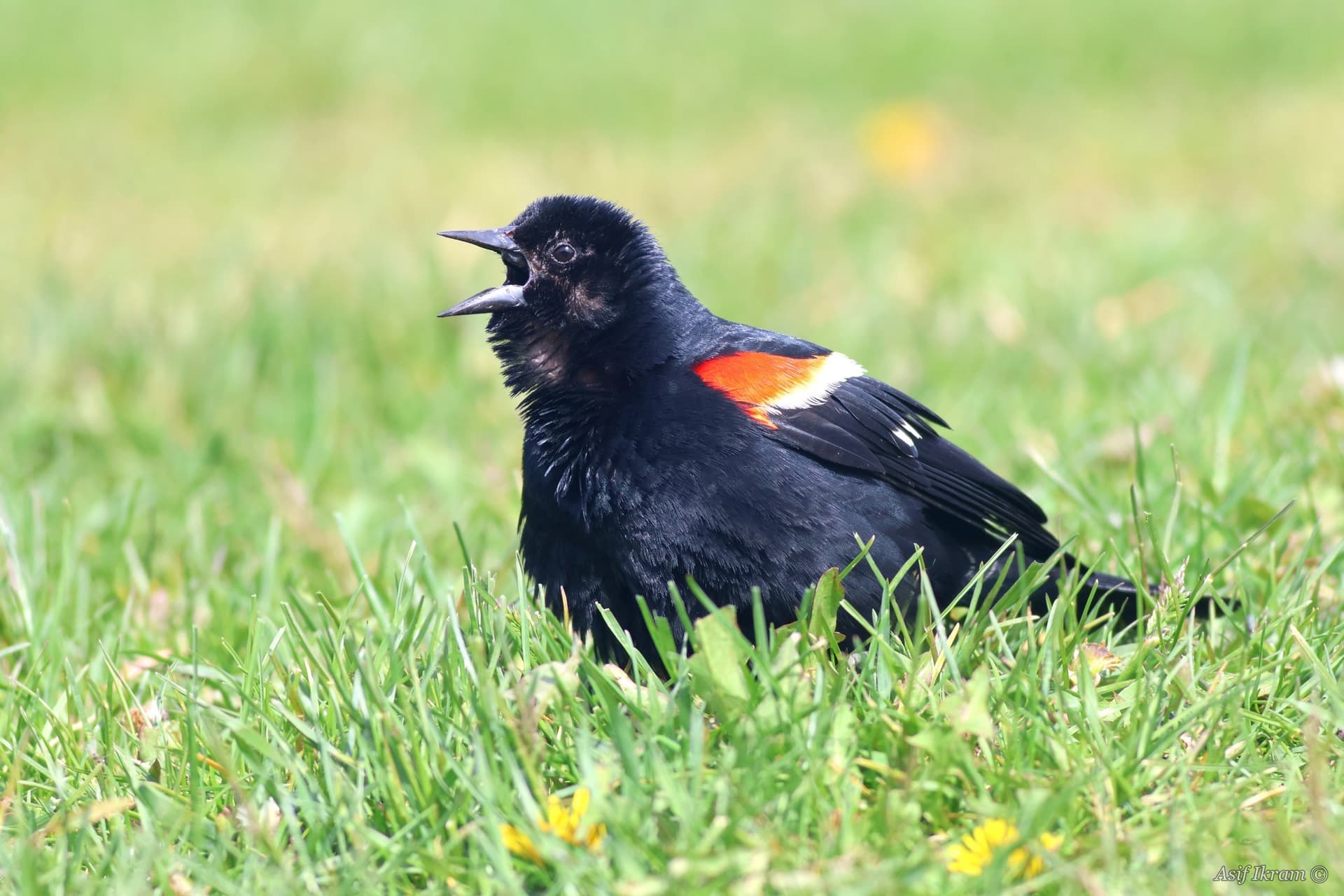
A male Red-winged Blackbird belts out his territorial call from the grass — that raspy, liquid 'konk-la-reee'. In spring, a single male may hold a territory large enough to include several females' nests.
23 May 2026 - Canon EOS R10 - EF 400mm f/5.6L - 1/640s · f/5.6 · ISO 400
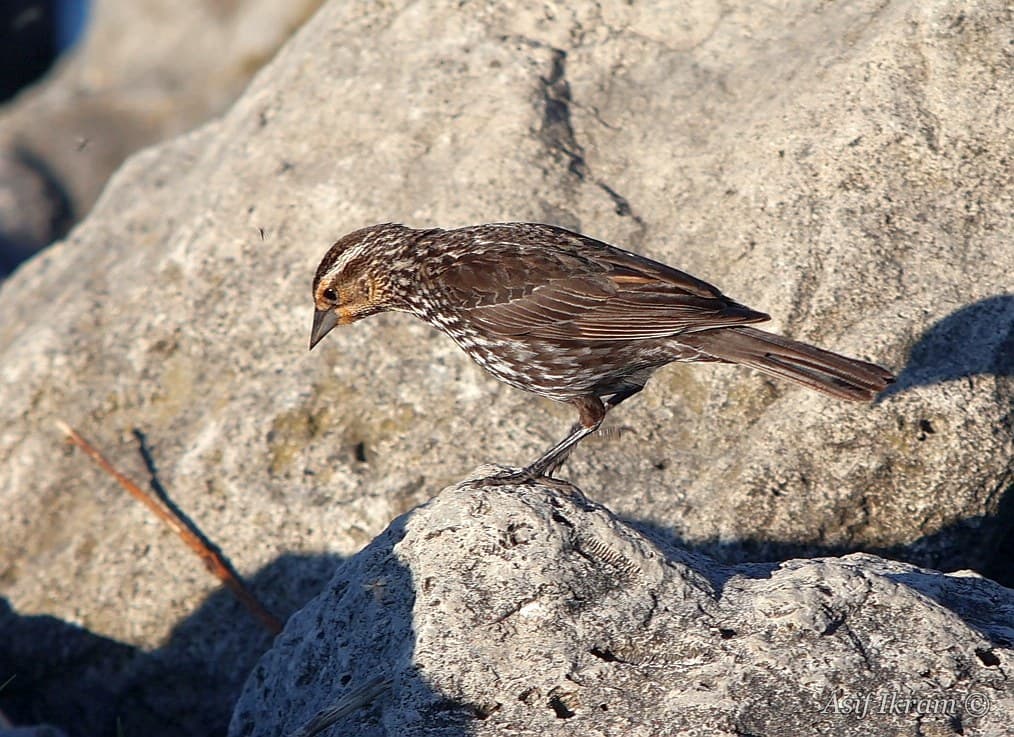
A female Red-winged Blackbird picks her way across lakeside rocks at the water's edge. In winter, females often flock separately from males — heading further south while the males stay closer to their breeding territories.
2 Jun 2026 - Canon EOS R10 - EF 70-200mm f/2.8L - 1/640s · f/5 · ISO 100
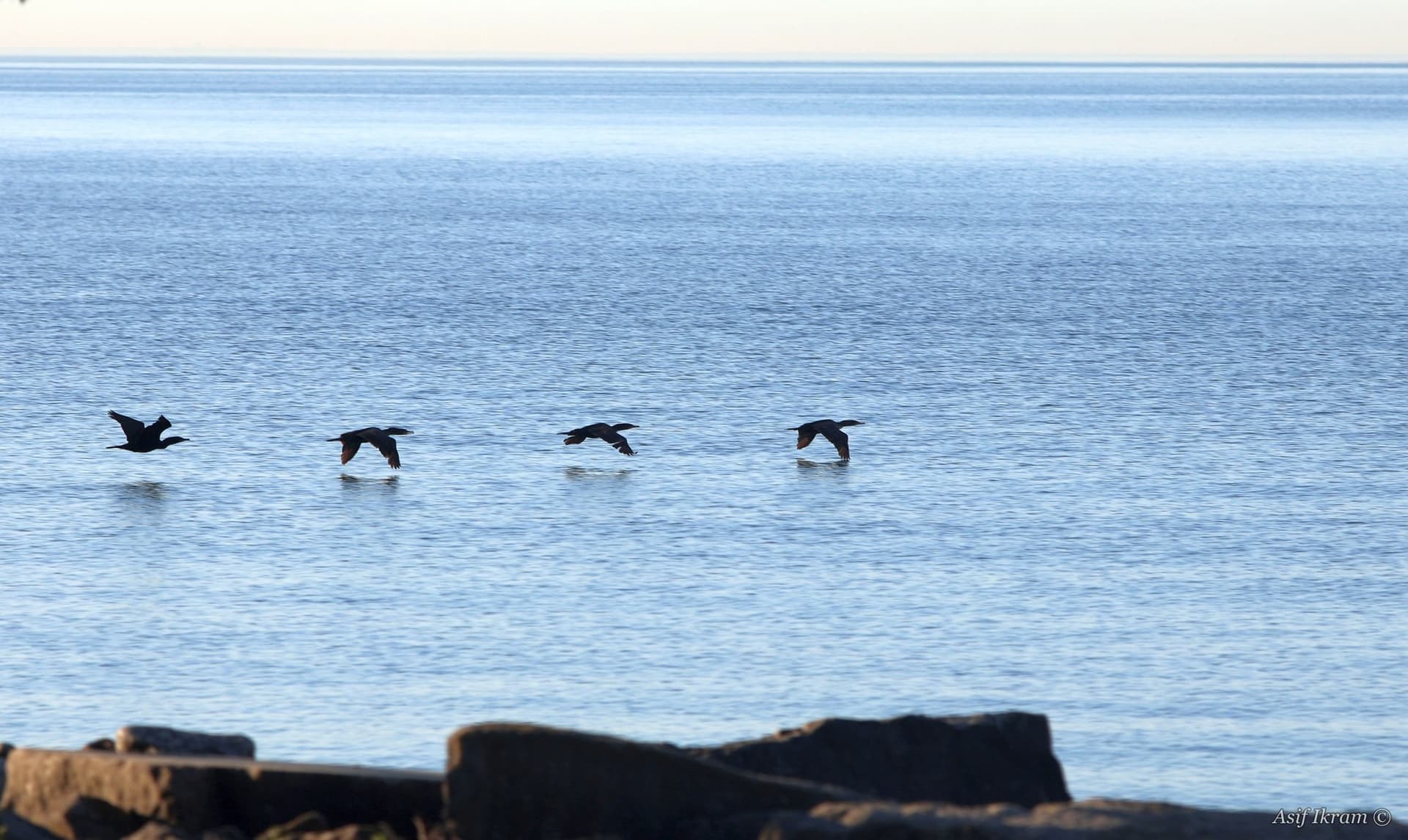
Four Double-crested Cormorants fly in loose formation low over the lake, silhouetted against the flat blue water. Cormorants often travel in lines or V-formations, much like geese — a striking sight at dusk.
2 Jun 2026 - Canon EOS R10 - EF 70-200mm f/2.8L - 1/640s · f/6.3 · ISO 100
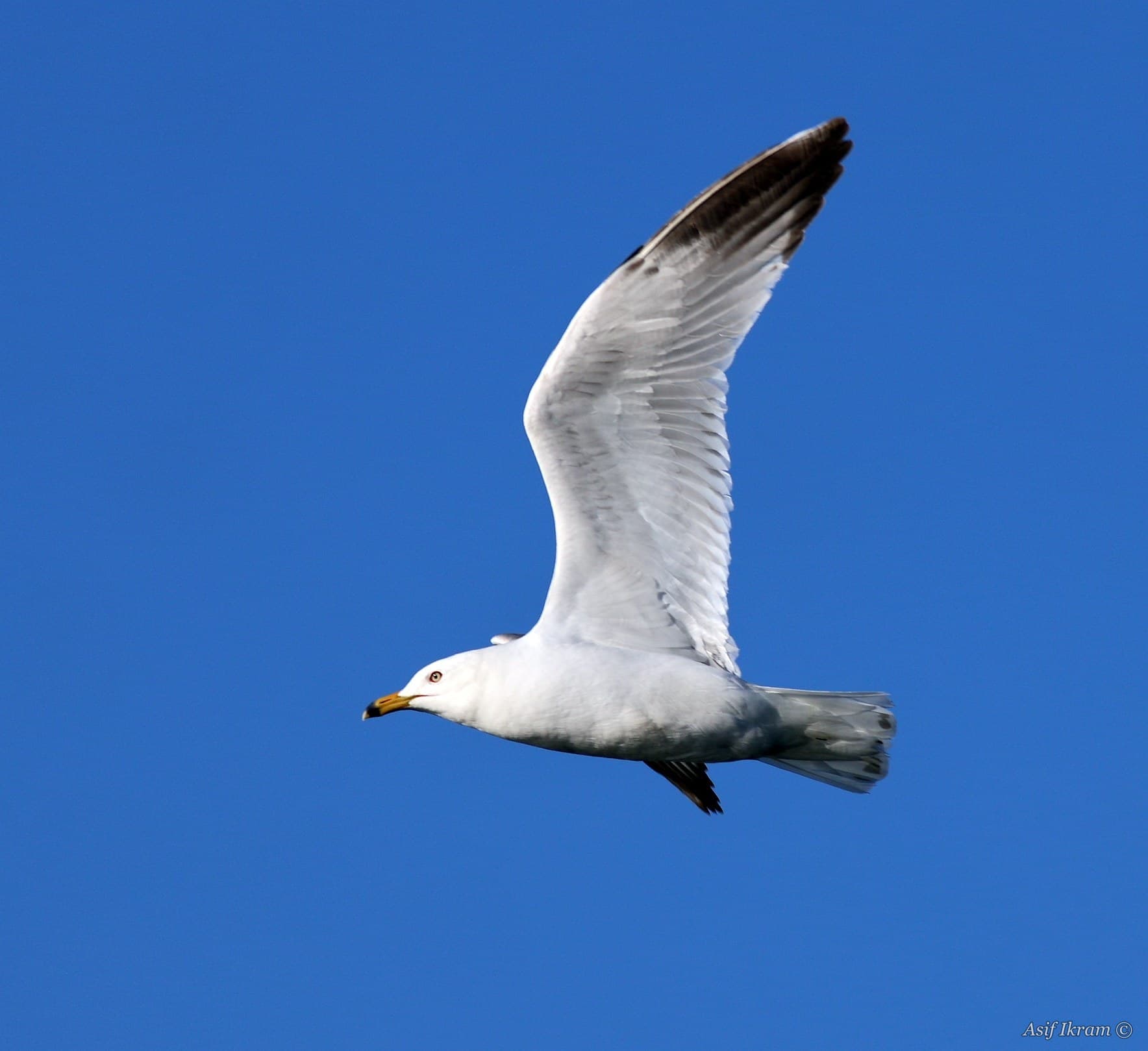
A Ring-billed Gull catches the updraft against a cloudless blue sky. Shot at 1/1600s, the feathers are pin-sharp — from the dark wingtips to the subtle grey mantle and the distinctive ring on the bill.
2 Jun 2026 - Canon EOS R10 - EF 400mm f/5.6L - 1/1600s · f/5.6 · ISO 100
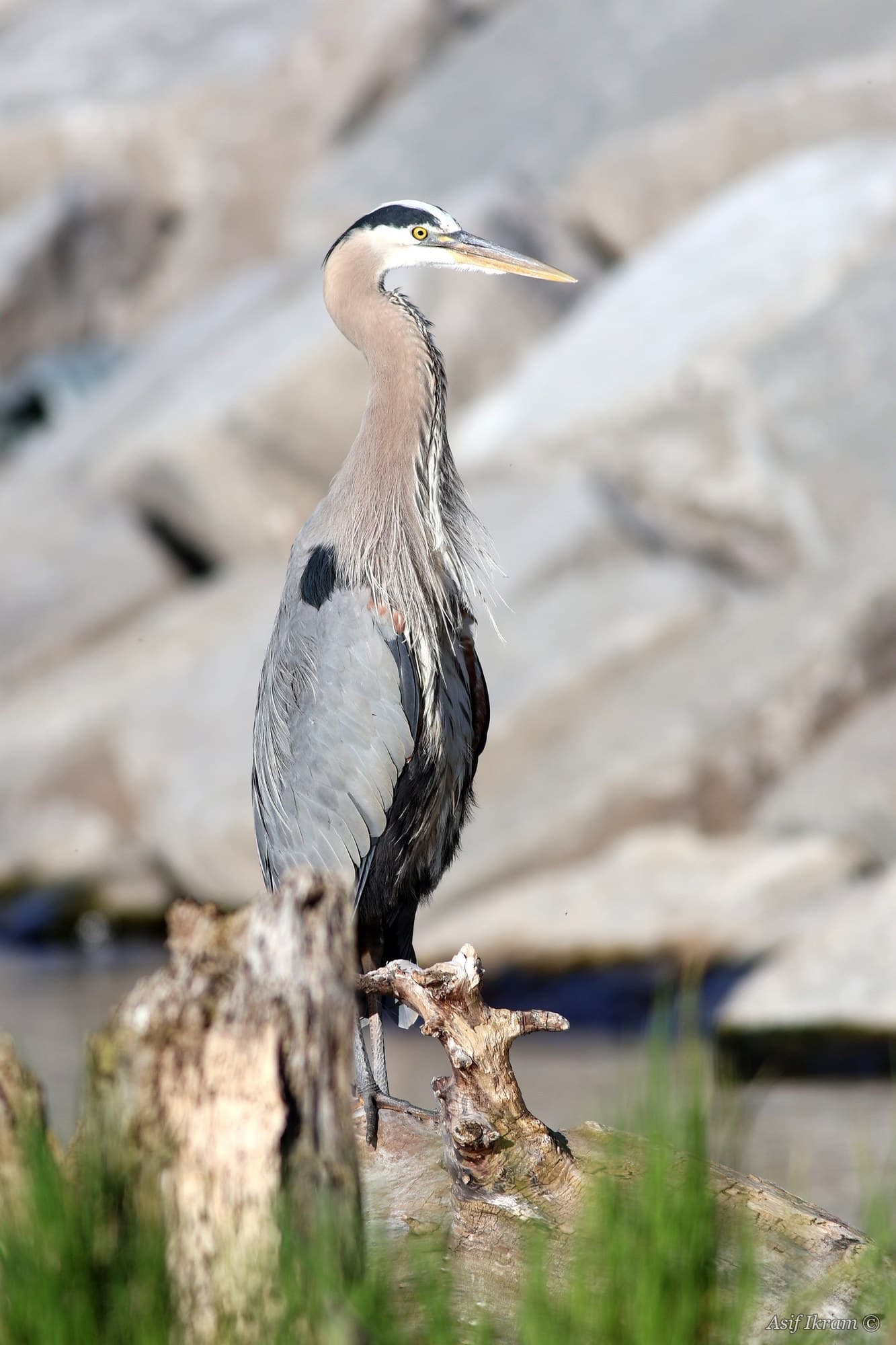
A Great Blue Heron stands sentinel on a weathered driftwood stump. North America's largest heron, it can stand over 1.2 metres tall. Despite its size, it is a patient, almost meditative hunter — capable of staying perfectly still for minutes at a time waiting for fish to come within range.
2 Jun 2026 - Canon EOS R10 - EF 400mm f/5.6L - 1/640s · f/5.6 · ISO 100
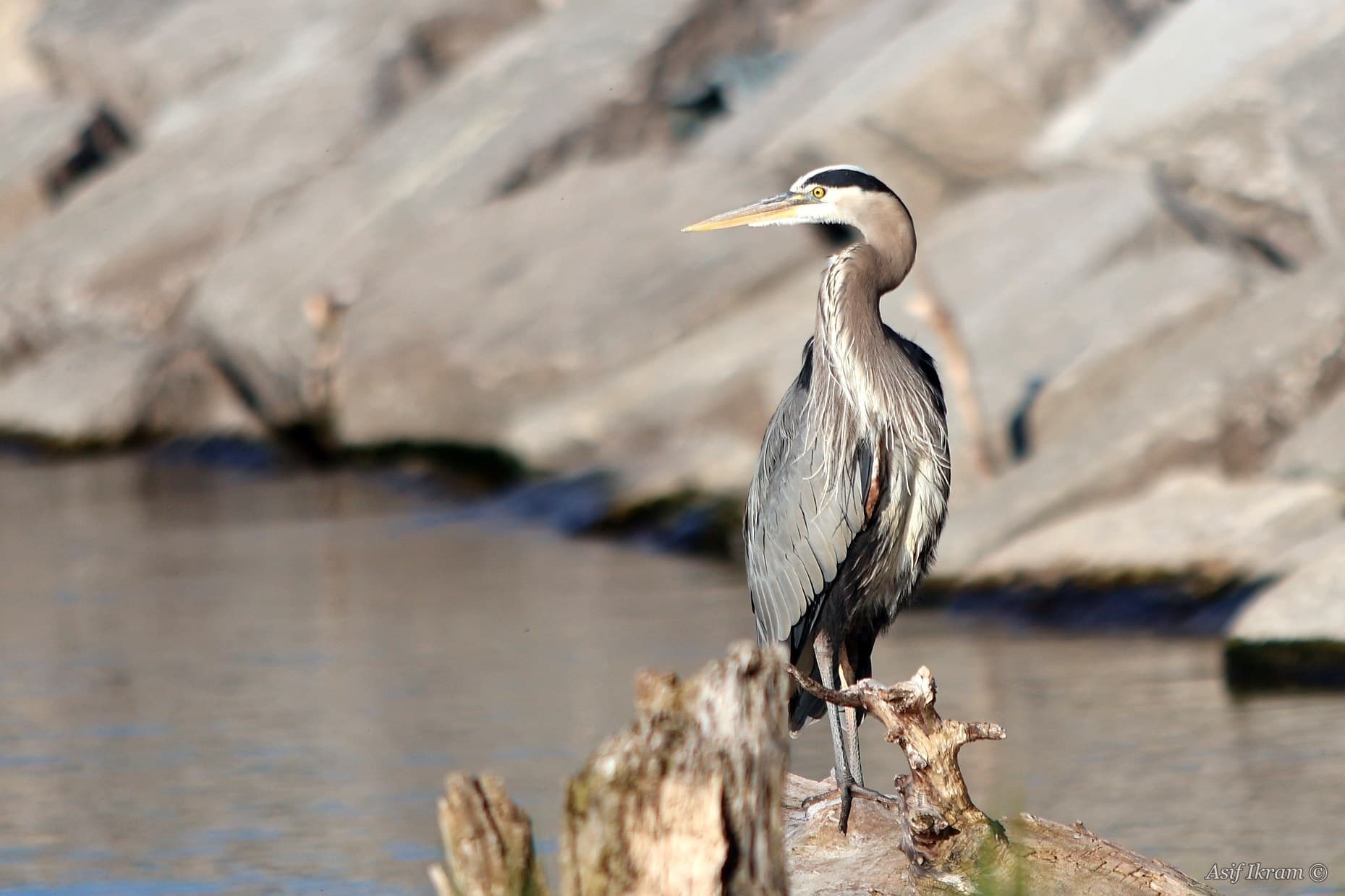
The same Great Blue Heron in a classic pose — neck tucked, eye alert, watching the water below. Herons strike with explosive speed, extending their S-curved neck like a spring to spear fish, frogs, or even small mammals.
2 Jun 2026 - Canon EOS R10 - EF 70-200mm f/2.8L - 1/3200s · f/2.8 · ISO 100
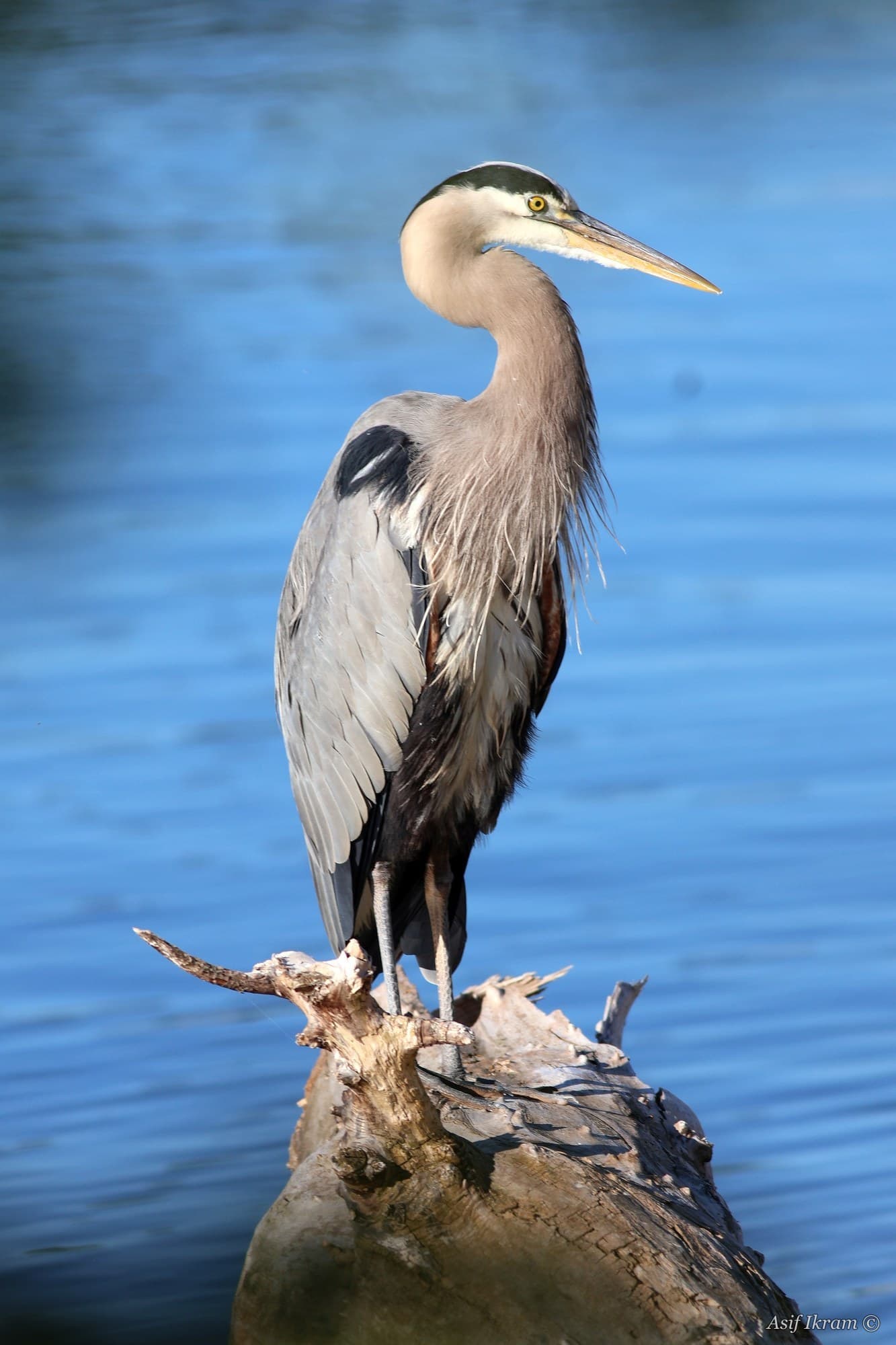
A Great Blue Heron with its long ornamental chest feathers ruffled by the breeze. These flowing plumes are most prominent in breeding season and are what gave herons their historic appeal to the Victorian feather trade — a practice that led to some of the earliest wildlife protection laws in North America.
2 Jun 2026 - Canon EOS R10 - EF 400mm f/5.6L - 1/500s · f/5.6 · ISO 100
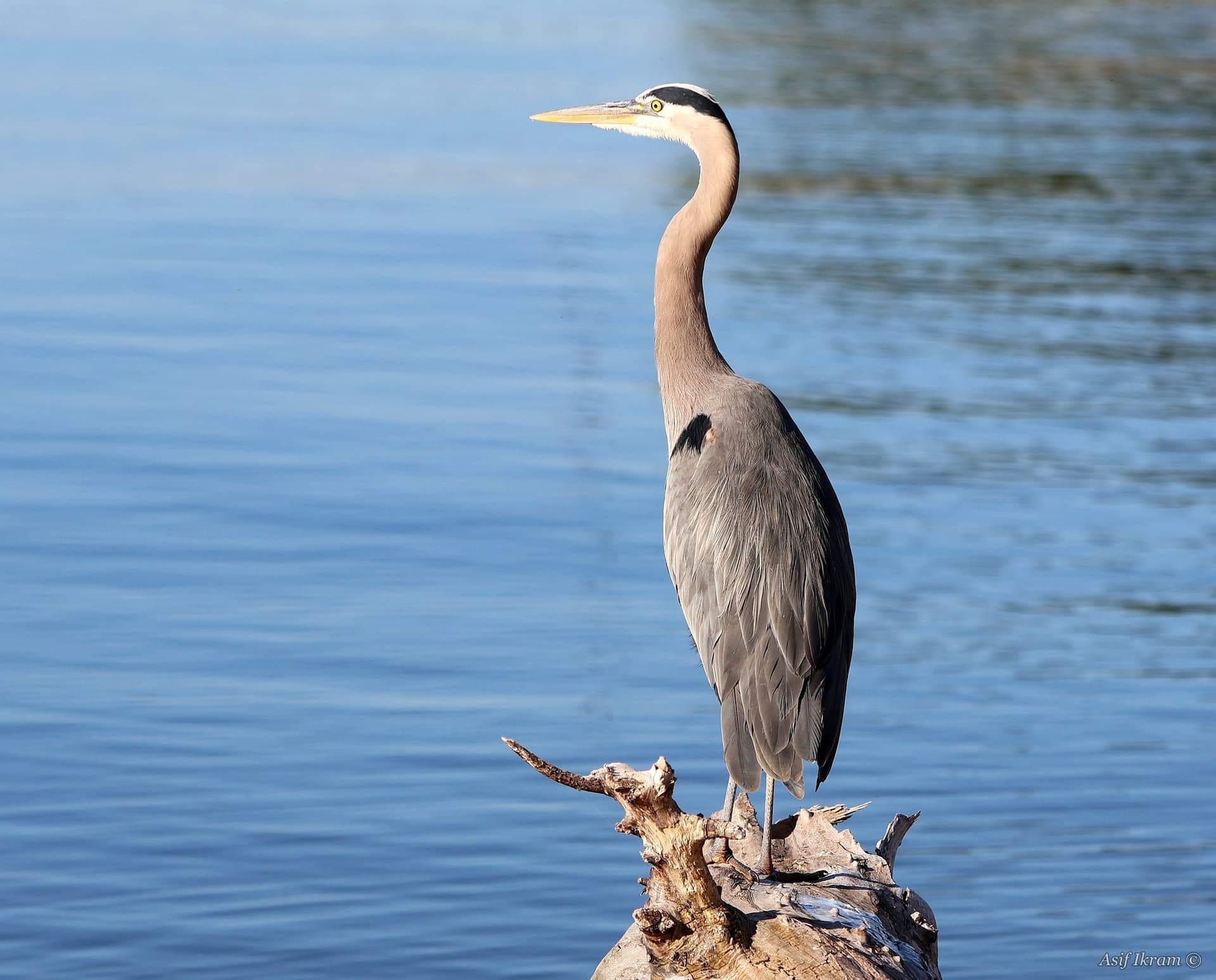
Perhaps the cleanest portrait of the session — the heron stretched to full height, the calm blue water a perfect backdrop. Great Blue Herons are mostly silent but produce a deep, hoarse 'frahnk' alarm call when disturbed, loud enough to be heard across a marsh.
2 Jun 2026 - Canon EOS R10 - EF 70-200mm f/2.8L - 1/800s · f/4.5 · ISO 100
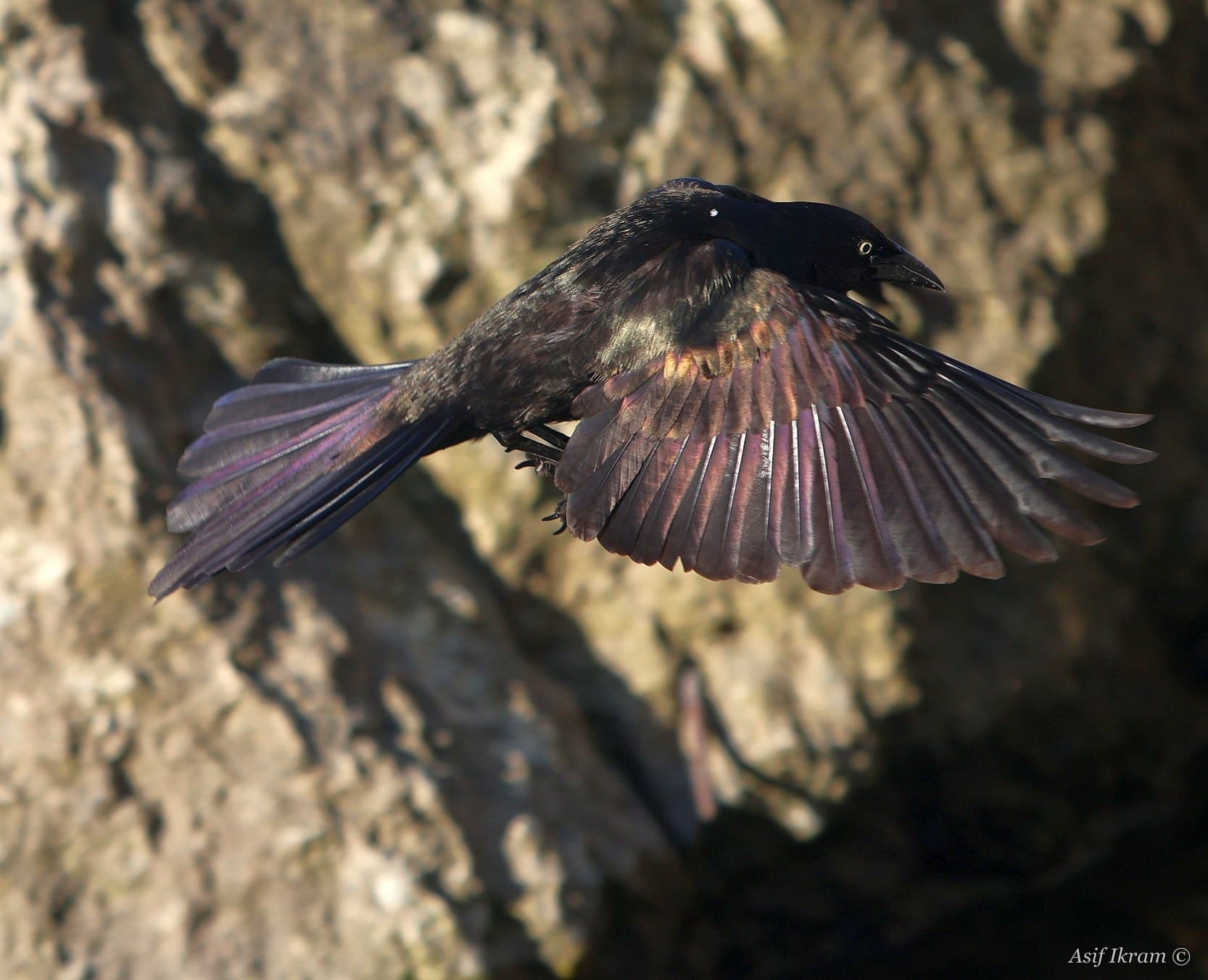
A Common Grackle launches from the rocks, wings fully spread — the iridescent bronze and purple sheen of its feathers catching the light beautifully. Grackles are often dismissed as 'just a black bird' but up close, the plumage is extraordinary.
2 Jun 2026 - Canon EOS R10 - EF 70-200mm f/2.8L - 1/800s · f/4.5 · ISO 100
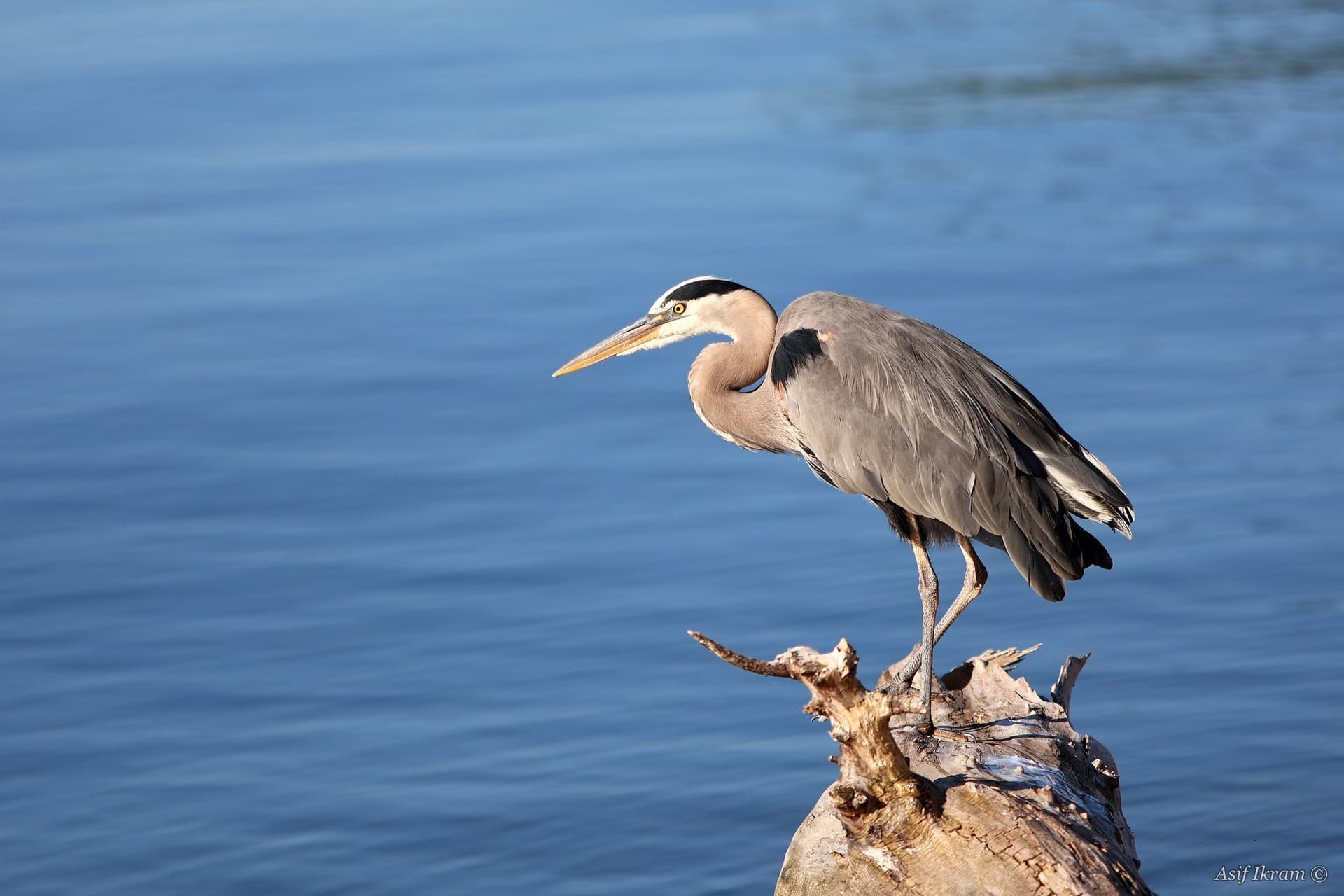
The heron leans forward into its hunting stance — weight over the toes, neck coiled, eyes locked on the water. At this moment, it can strike in approximately 0.07 seconds.
2 Jun 2026 - Canon EOS R10 - EF 70-200mm f/2.8L - 1/2500s · f/2.8 · ISO 100
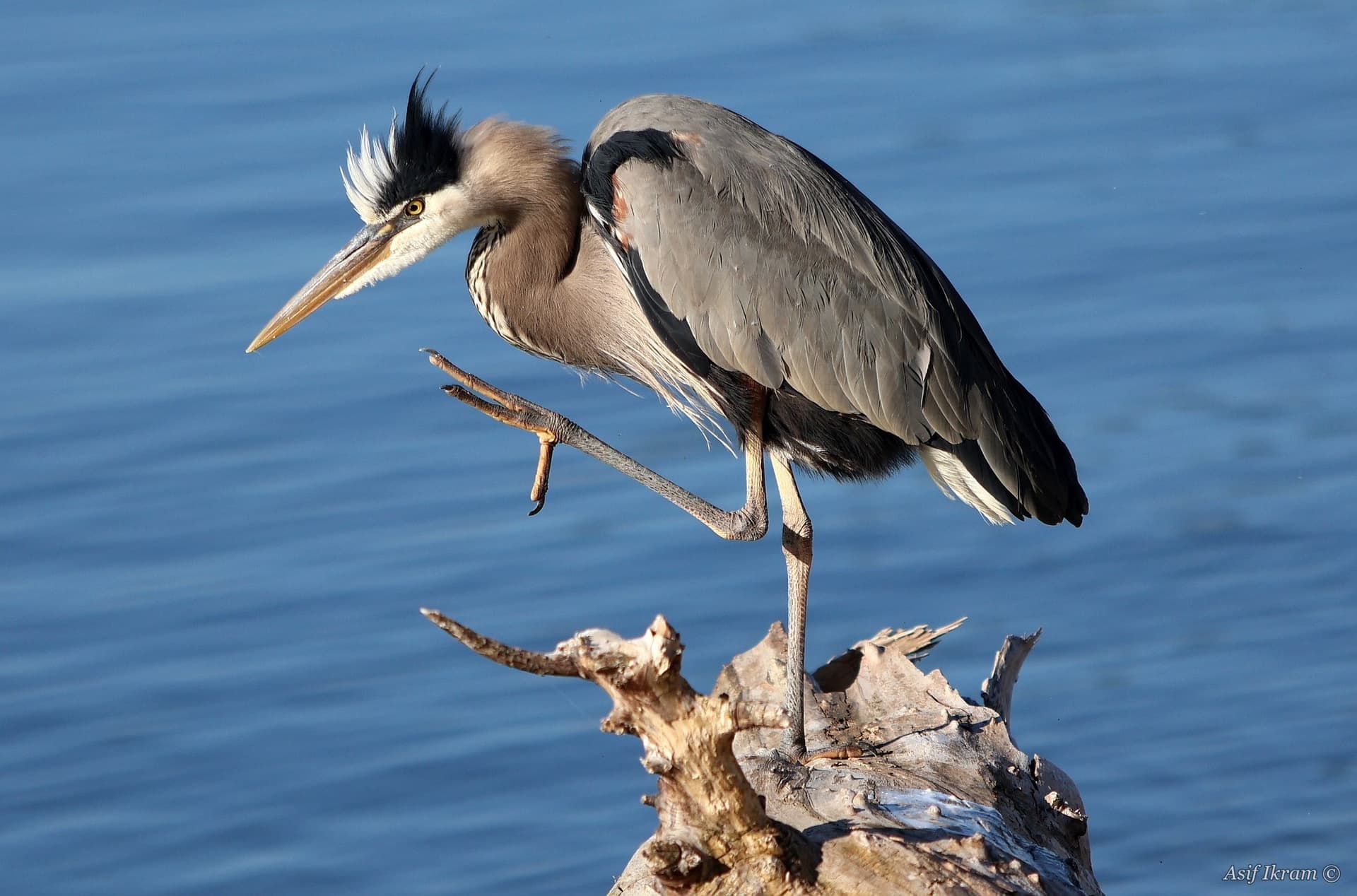
A windswept moment — the heron's crest feathers blown upright, balanced on one leg. Herons often stand one-legged to conserve body heat; the tucked leg is held close to the warm body while the other locks into position.
2 Jun 2026 - Canon EOS R10 - EF 70-200mm f/2.8L - 1/2500s · f/2.8 · ISO 100
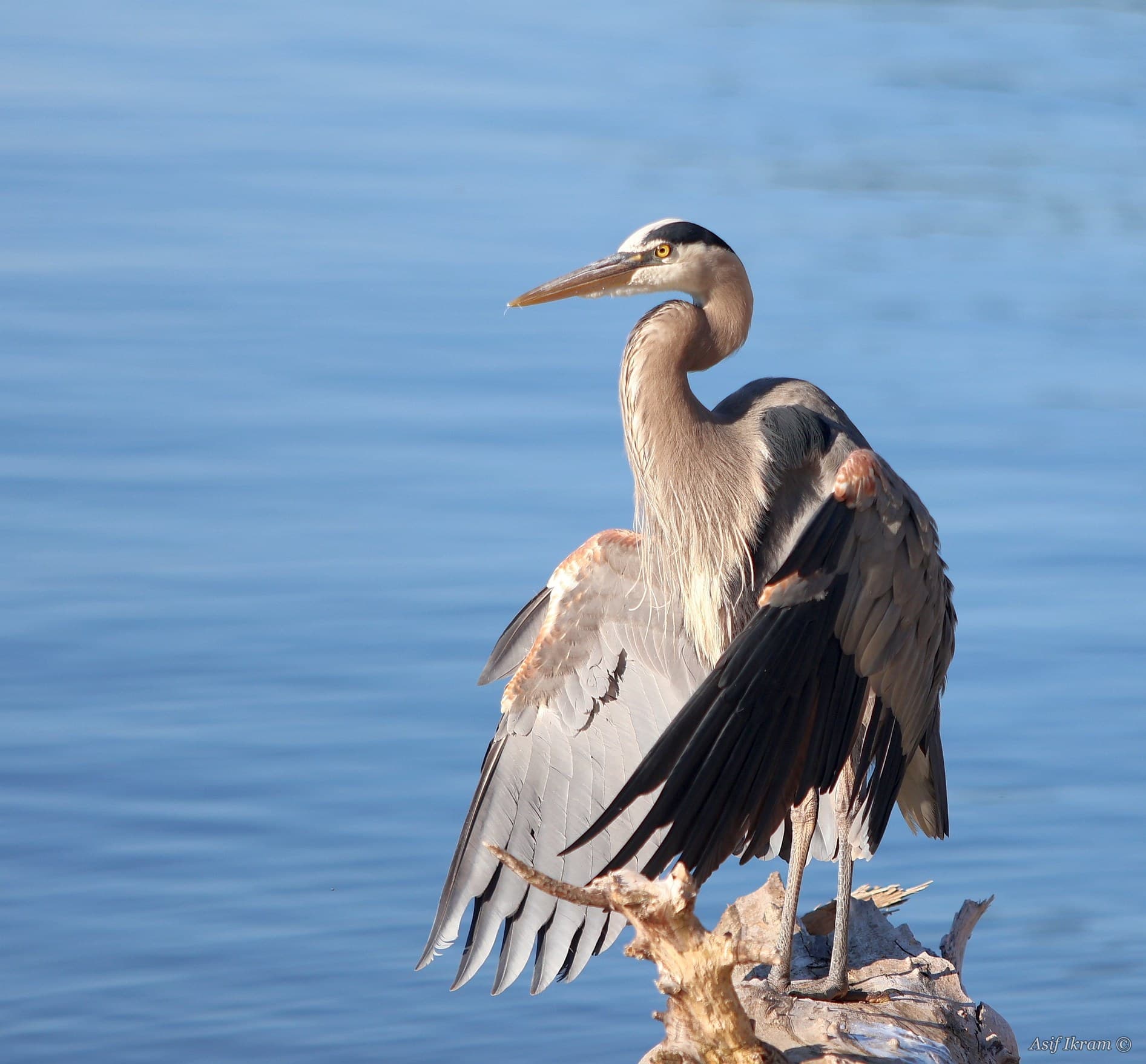
The standout shot of the session — the Great Blue Heron wings spread wide to sun itself, a behaviour called 'sunning' or 'wing-drying'. The full wingspan of a Great Blue Heron can reach 1.8 metres — about the same as a tall adult's arm span.
2 Jun 2026 - Canon EOS R10 - EF 70-200mm f/2.8L - 1/1600s · f/2.8 · ISO 100
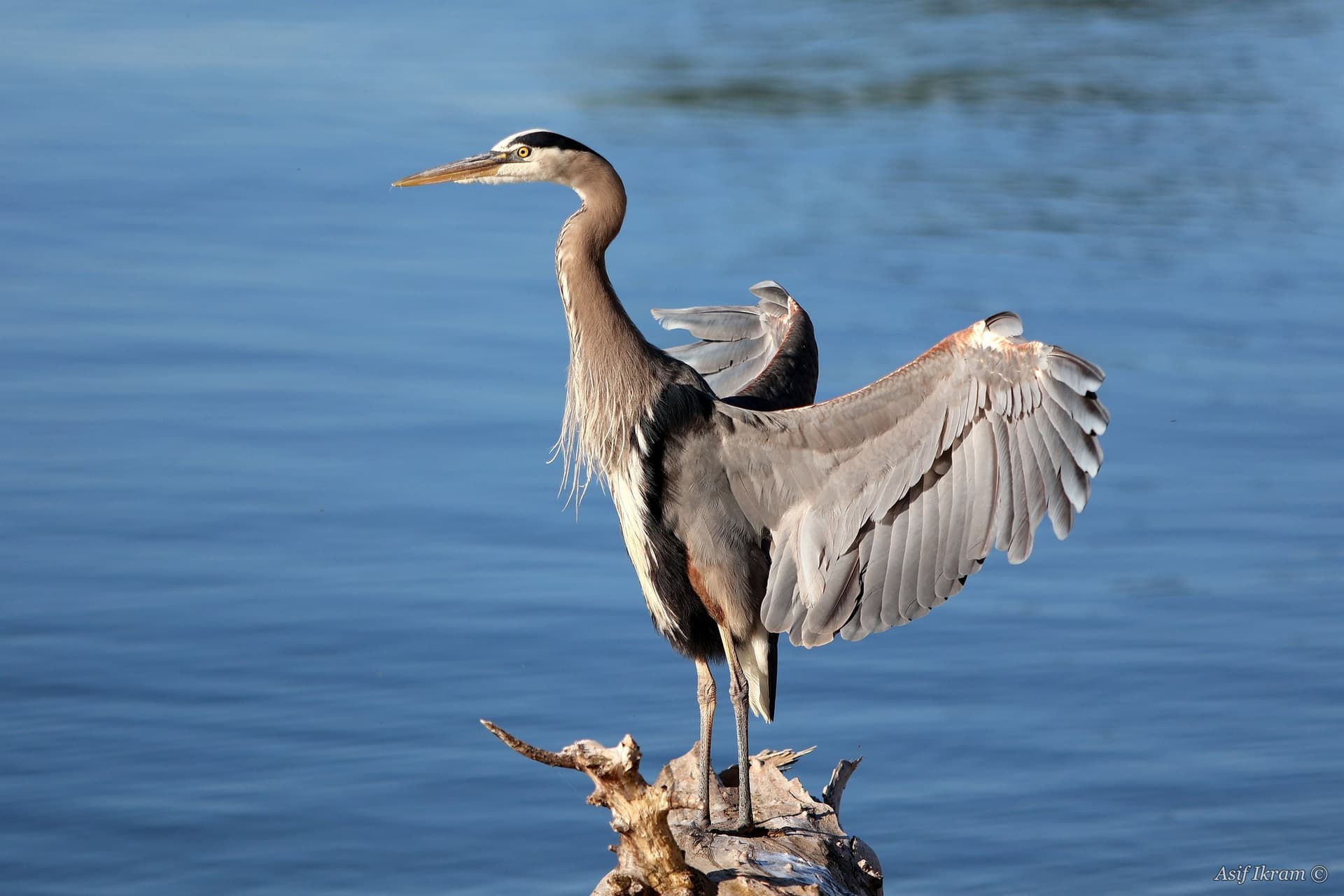
The heron begins to fold its wings back in — a split second after the full sunning display. The subtle rufous-orange tinge on the inner wing feathers is visible here, a feature more pronounced in older birds.
2 Jun 2026 - Canon EOS R10 - EF 70-200mm f/2.8L - 1/2500s · f/2.8 · ISO 100
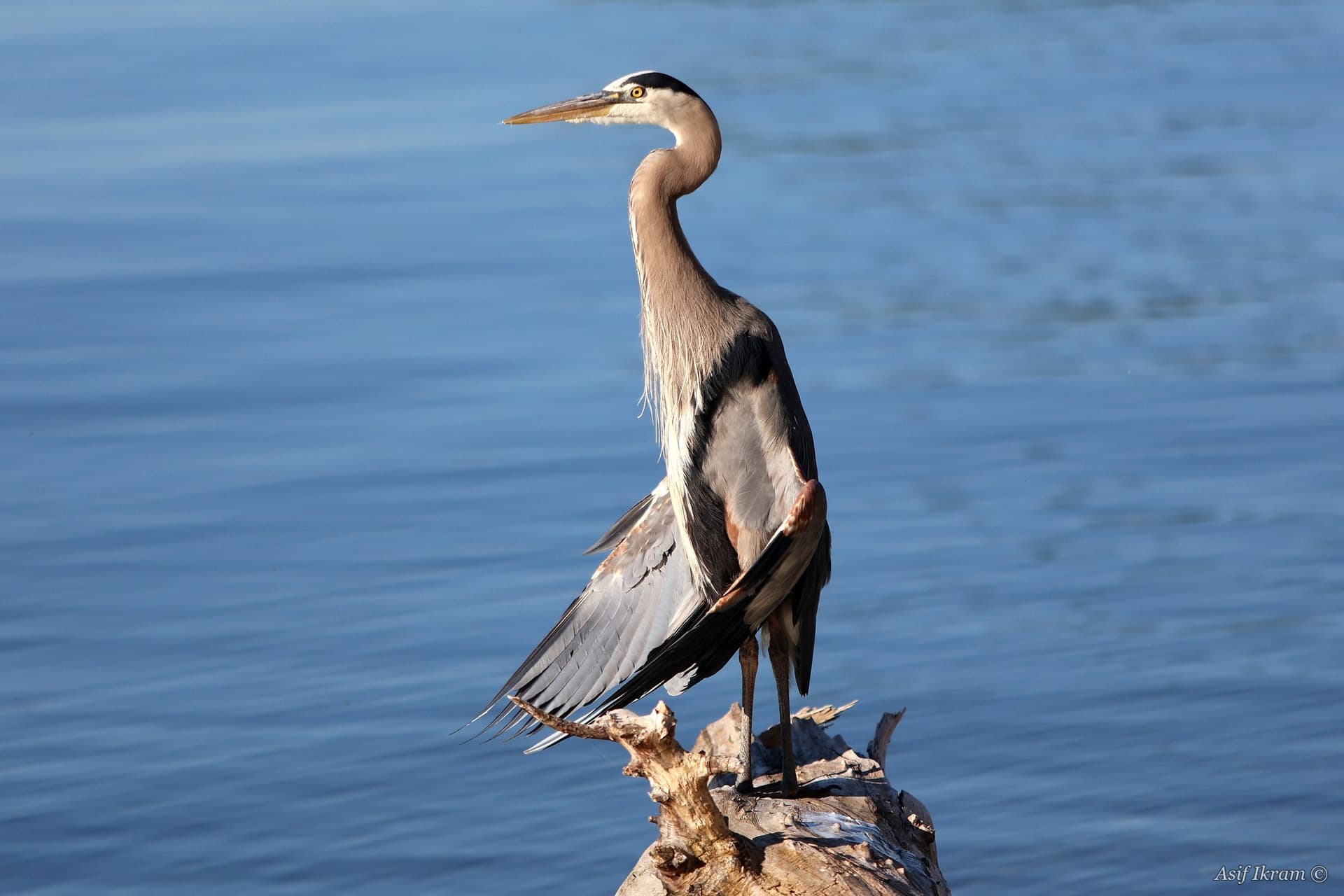
One final look before the heron composed itself — wings still slightly dropped, catching the last of the sun's warmth. Great Blue Herons are year-round residents across much of southern Canada, though they do move south when lakes freeze over.
2 Jun 2026 - Canon EOS R10 - EF 70-200mm f/2.8L - 1/3200s · f/2.8 · ISO 100
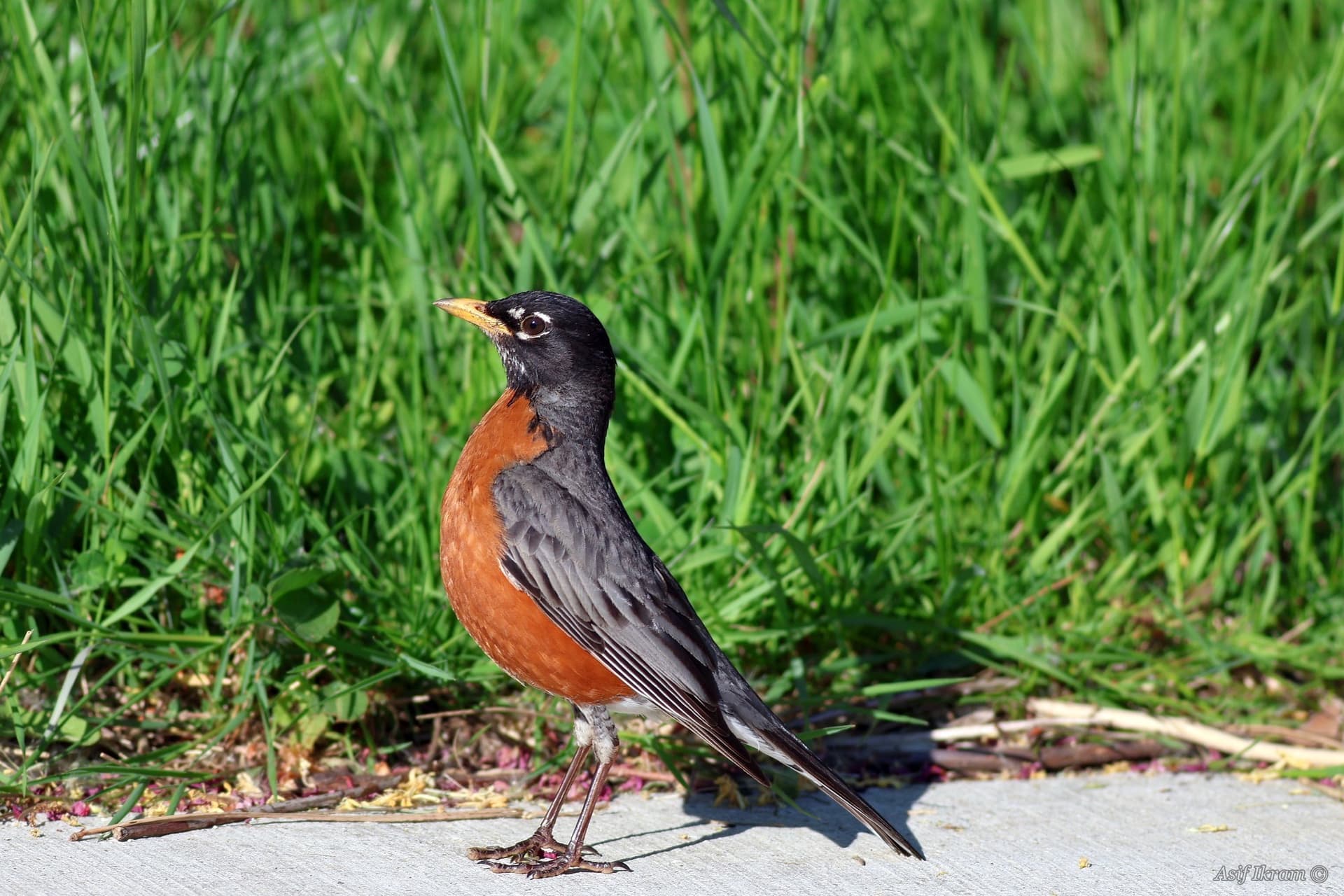
An American Robin pauses on the pavement — the classic herald of spring in Canada. Despite sharing a name with the European Robin, they are not closely related; the American Robin is actually a large thrush, named by homesick settlers for its red-orange breast.
2 Jun 2026 - Canon EOS R10 - EF 400mm f/5.6L - 1/640s · f/5.6 · ISO 100